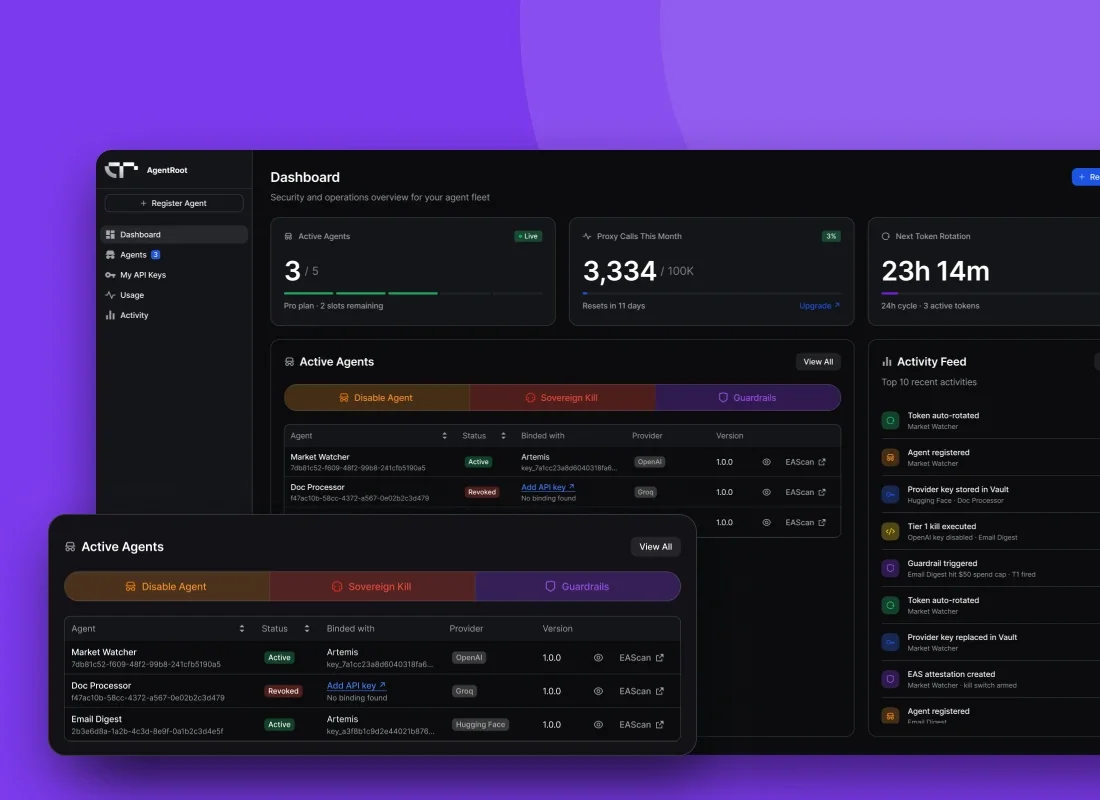
The product. AgentRoot is a control center for autonomous AI agents. It holds the API keys agents use, watches what they do, and lets you shut one down the moment it goes wrong.
Who it's for. Developers and teams running AI agents with real API keys and real budgets, on tools like Claude Code, Cursor, LangChain and CrewAI.
My role. I led the UI and UX of the end-user dashboard from zero: flows, information architecture, UI and components.
The problem
AI agents run on their own, call paid APIs and can spend money fast. When one goes sideways (usually at 3 AM), teams without a control layer are stuck with bad options:
- All or nothing. Stopping one bad agent often meant rotating every key, which broke every other agent too.
- Keys in the wrong hands. Agents usually hold the real OpenAI or Anthropic keys, so a leaky agent means a leaked key.
- Nobody's awake. Problems happen while people sleep, so limits need to kick in on their own.
There was no existing UI to build on, and one action carries real weight: Sovereign Kill permanently revokes an agent's identity on the blockchain, outside AgentRoot, and can't be undone.
Where it fits in the flow
- What feeds it: the provider keys teams store in AgentRoot (OpenAI, Anthropic, Groq, Google AI and Mistral), and each agent's registration, which creates its identity on-chain.
- What it feeds: every call an agent makes goes through AgentRoot, so cutting access takes effect right away. A Sovereign Kill goes further, out to the blockchain, where every service that checks the agent's credential will reject it from then on.
Kill controls right on the dashboard
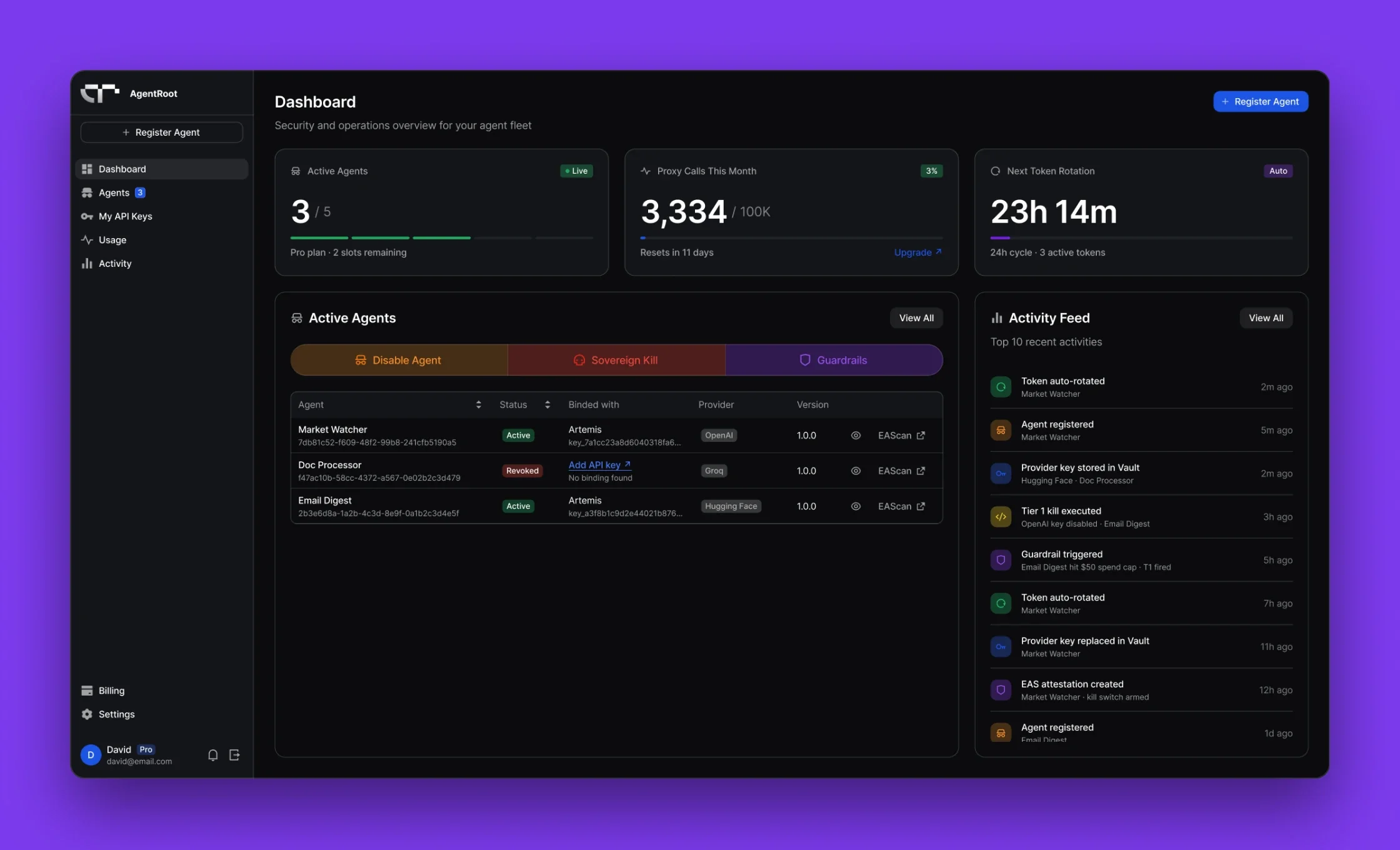
The dashboard opens on what matters most for security: live agents, API calls against the plan, and the next key rotation. Disable Agent, Sovereign Kill and Guardrails sit right above the agent table, and every key, kill and guardrail event shows up in the activity feed.
Why it works: in an emergency, nobody wants to dig through settings. The controls are where your eyes already are, and the activity feed shows exactly what happened and when.
Three tiers, sized to the problem
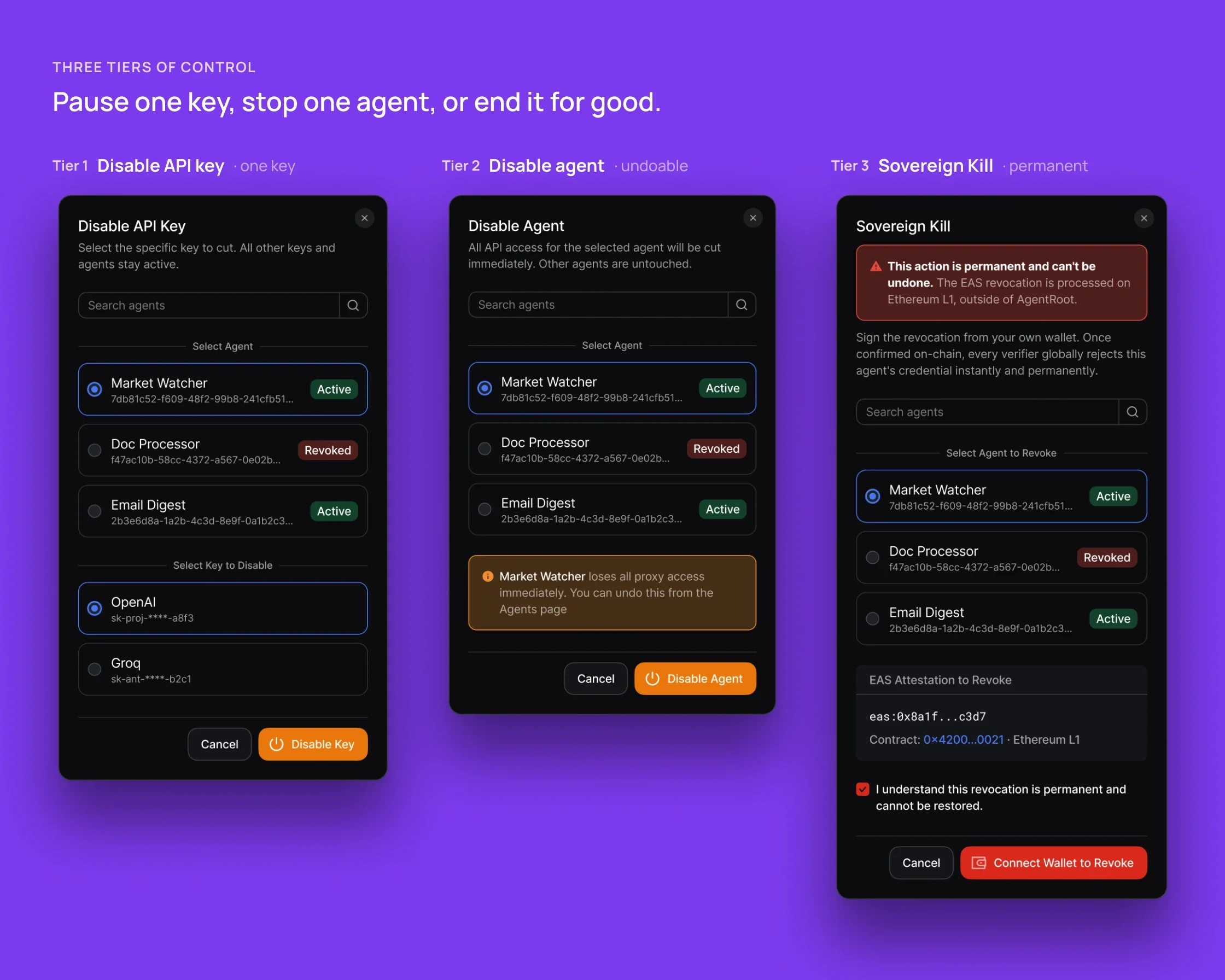
A leaky key and a rogue agent need different fixes, so I designed three levels of response:
- Disable API key: cuts one key. Every other key and agent keeps running.
- Disable agent: stops one agent completely, and can be undone.
- Sovereign Kill: revokes the agent for good.
All three follow the same steps (pick the agent, pick what to cut, confirm), so they're easy to get through under pressure. Color climbs with the stakes: orange for actions you can undo, red for the permanent one. Sovereign Kill adds friction on purpose, with a warning up top, the exact credential being revoked, a confirm checkbox and a signature from your own wallet.
Why it works: people can match the response to the problem instead of reaching for the biggest button. The permanent action is the only one that slows you down, and that's on purpose.
Guardrails that can't go too far
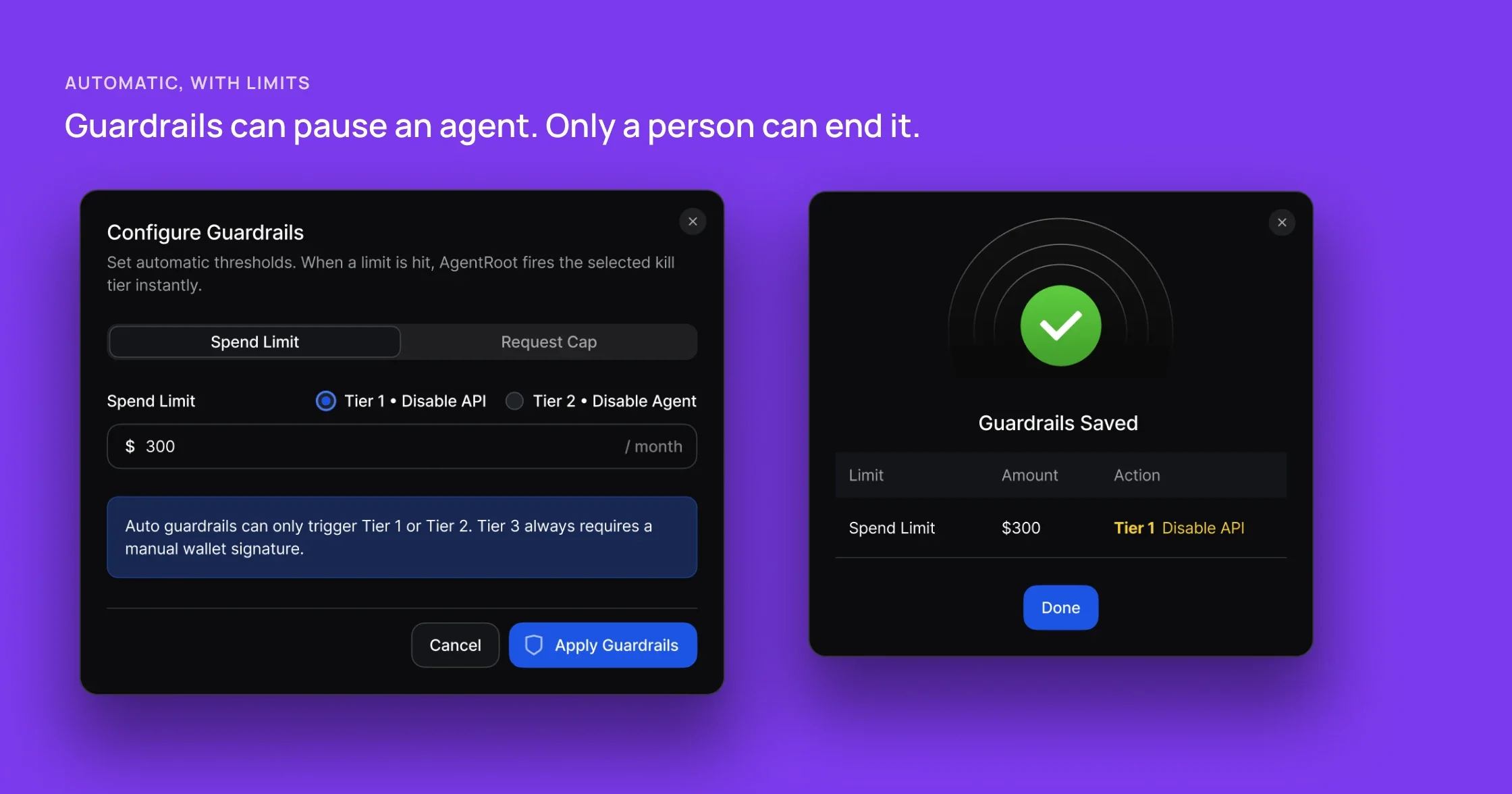
Guardrails step in on their own when an agent hits a spend limit or request cap, like a $300 monthly budget. They can only disable a key or an agent, though. A permanent kill always needs a person, and the modal says so right where you set the limit.
Why it works: automation handles the 3 AM problems, but a machine never makes a decision that can't be undone.
Credentials, shown once
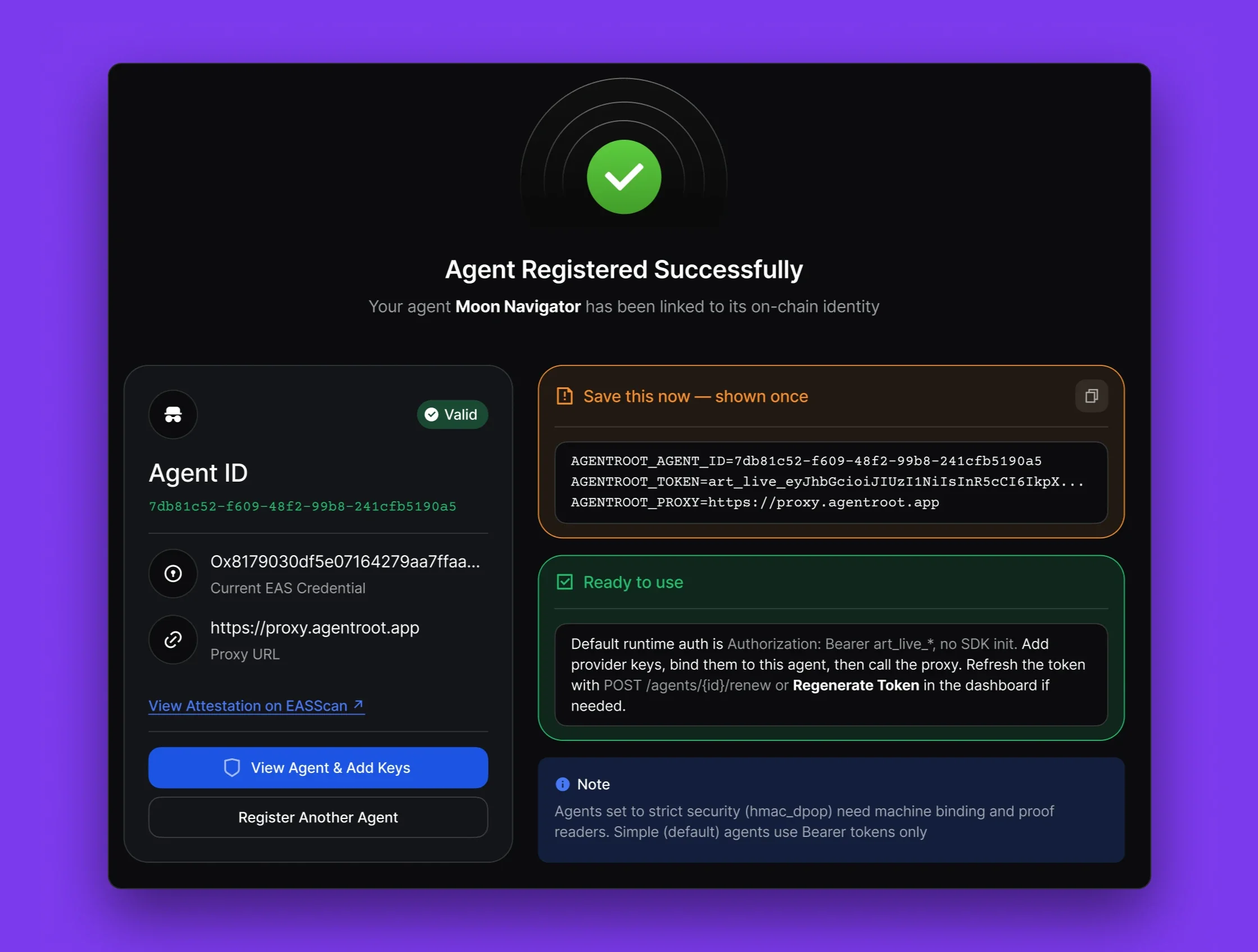
Registering an agent takes a name and an optional description, then a review screen that explains what happens on-chain before anything gets submitted. The success screen shows the agent's credentials once, in a single block you can copy, with the setup steps right beside it.
Why it works: showing credentials only once is safer, so the screen makes copying them easy and clearly says they won't be shown again.
Keys stay in the vault
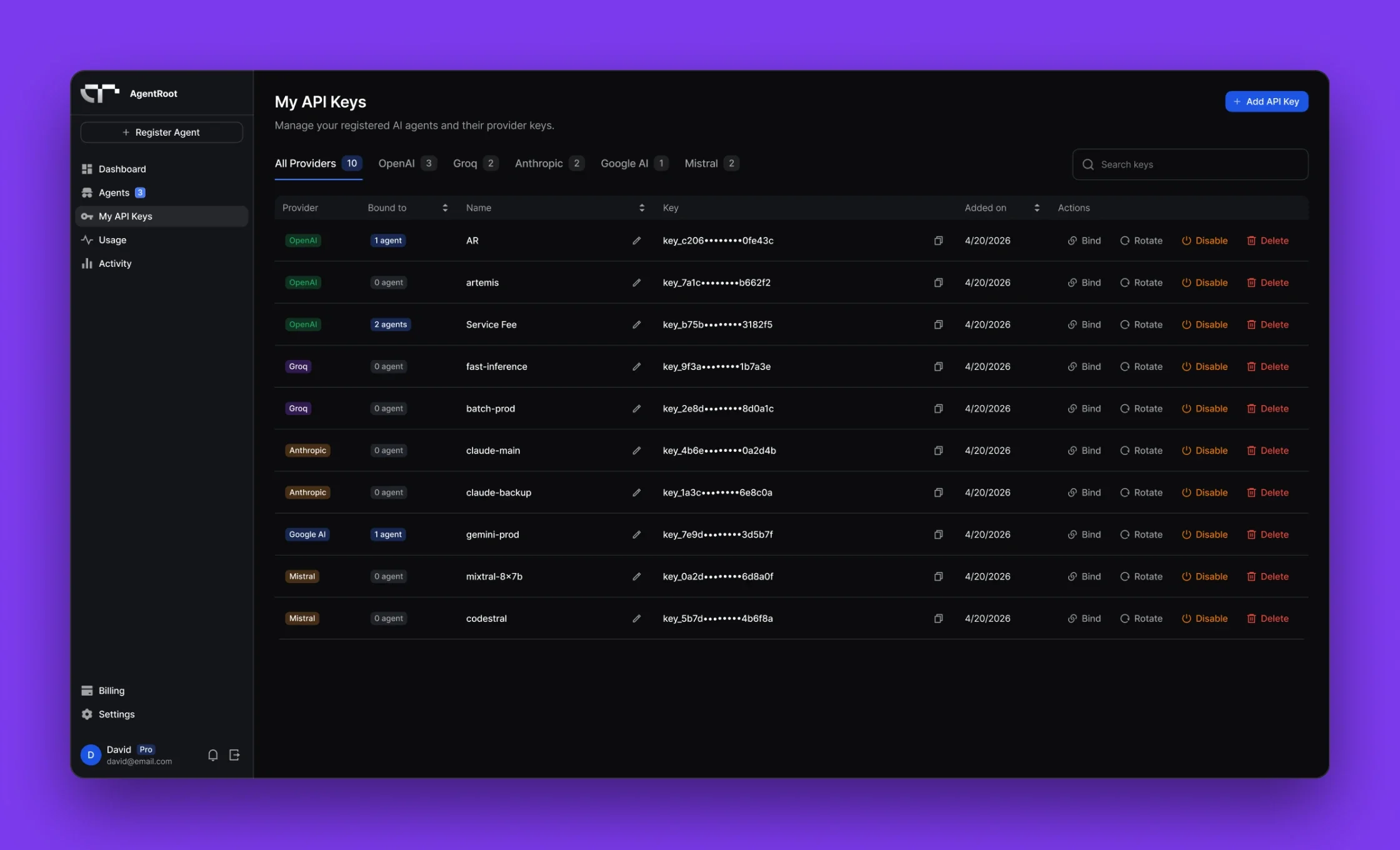
Provider keys live in one table you can filter by provider, along with how many agents use each one. You can bind, rotate, disable or delete a key without leaving the row. Agents only ever get an AgentRoot token, never the provider key behind it.
Why it works: if an agent leaks its token, you cut that one token. The real key stays safe, and so does every other agent.
By the numbers
- 3 levels of response, all using the same 3 steps
- 5 AI providers managed from one vault
- 0 provider keys handed to agents
- 1 permanent action, protected by 4 safety steps: a warning, the exact credential, a confirm checkbox and a wallet signature